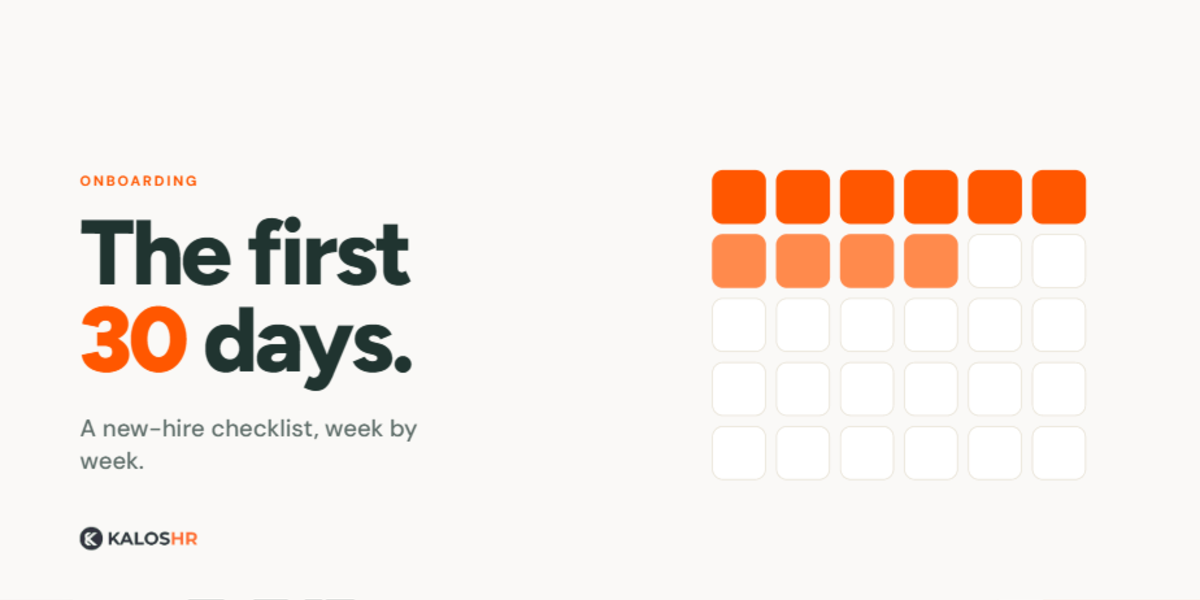
New hire onboarding checklist: the first 30 days that make people stay
You spent weeks finding the right person, made the offer, and celebrated the yes. Then they show up to no laptop, no plan, and a vague "settle in," and within a month they're quietly wondering if they made a mistake. Onboarding is where good hires are kept or lost, and small teams underrate it constantly. The first 30 days set whether someone becomes a committed part of your team or an early departure you have to replace.
Here's a 30-day onboarding checklist built for a small team, no HR department required.
Before day one
The work starts before they arrive. A new hire who lands to chaos doubts the decision immediately.
- Send a warm welcome email with their start time, where to go or which link to join, and what the first day looks like
- Sort their tools and access: laptop, accounts, email, the systems they'll use
- Tell the team who's joining and what they'll do
- Prepare a simple first-week plan so they're not staring at an empty calendar
- Have their first small task ready, something real but achievable
Day one
The goal of day one is for them to leave feeling they made the right choice.
- Greet them properly and walk them through the day
- Cover the basics: how you communicate, where things live, who does what
- Introduce the team, even if that's only you and a couple of others
- Give them the first task and make sure they can start it
- Check in at the end of the day and answer the questions they didn't want to ask
Week one
The first week is about orientation and one early win.
- Set clear expectations for the first month: what good looks like, what they own
- Walk them through your customers, your product, and how the business makes money
- Pair them with someone (you, if you're small) for questions
- Help them land one small, visible win so they feel useful
- Have an honest check-in at the end of the week: how's it going, what's unclear
Month one
Weeks two to four turn orientation into contribution.
- Give them real ownership of something, with support
- Share feedback early and often, both directions
- Keep introducing context: the history, the why behind decisions
- Set up a 30-day review to talk openly about how it's going for both of you
- Ask what would make their job easier, and act on at least one thing
Why this matters more for small teams
At a big company, a shaky first month gets absorbed by a structured program and a wide team. At a small one, there's nowhere to hide. A new hire feels every gap, and a bad onboarding experience reaches everyone fast. The flip side is your advantage: a small team can make onboarding personal in a way a big one can't. A founder who takes a new hire to lunch on day one leaves an impression no corporate program matches.
Keep the loop closed
Good onboarding starts before the offer is even signed, in how the whole hiring process felt. A candidate who experienced a clean, responsive process arrives already trusting you. In KalosHR, the offer goes out from the same place you ran the hire, with a full record of the conversation, so nothing about the person gets lost between "yes" and day one, and you start their first day already knowing them.
The hire isn't finished when they accept. It's finished when they're contributing and glad they came. Use the first 30 days well, and the person you worked so hard to find will stay.