Interview scorecards: how to score candidates fairly (free template)
After a few interviews, candidates blur together. You remember who you clicked with, who told a good story, who reminded you of someone you like. What you don't remember clearly is who'd do the job best. That's how good hiring goes wrong: not through bad intentions, but through gut feel quietly favoring the most charming candidate over the most capable one.
An interview scorecard fixes that. Here's how to build one, with a template you can copy.
What a scorecard does
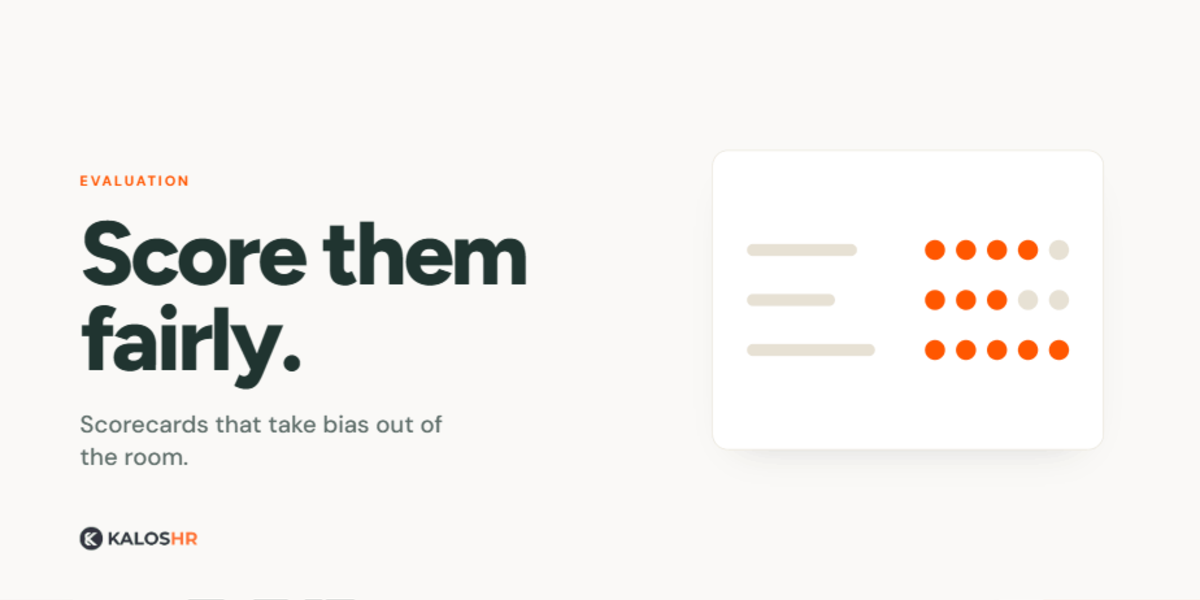
A scorecard is a simple sheet that lists what you're assessing and gives each candidate a score on each item. It forces you to decide in advance what matters, rate every candidate against the same things, and write down your reasoning while it's fresh. The result is a fair comparison based on the job, not a popularity contest based on the conversation.
It also makes group decisions sane. When three people interviewed a candidate, comparing three scorecards beats arguing from three different memories.
Decide what to score before you interview
The work happens before the interview, not after. Pick four to six things that genuinely predict success in this role. Mix hard skills and the softer traits that matter. For most roles that's some combination of:
- The core skill the job needs
- Relevant experience or judgment
- Problem-solving and how they think
- Communication
- Ownership and reliability
- Fit with how your team works
Avoid vague items like "culture fit" on their own; they invite bias. Define exactly what you mean, like "works well without close supervision."
Use a simple, consistent scale
A 1-to-4 scale works well and avoids the lazy middle. For example: 1 = clear gap, 2 = below what we need, 3 = meets the bar, 4 = clearly strong. Force a choice between "below" and "meets" so no candidate drifts to a noncommittal 3 on everything.
The template
Copy this for each candidate:
Candidate: [Name] · Role: [Title] · Interviewer: [You]
| What we're scoring | Score (1-4) | Evidence / notes |
|---|---|---|
| [Core skill] | ||
| [Relevant experience] | ||
| Problem-solving | ||
| Communication | ||
| Ownership | ||
| [Team fit, defined] |
Overall: [Total or average] · Recommendation: Advance / Hold / Pass · One-line reason: [Why]
The "evidence" column matters as much as the score. A number with a reason ("scored 4, walked through a real example of owning a launch end to end") is useful. A number alone isn't.
Score right after, not at the end of the day
Fill it in within a few minutes of the interview, while the answers are fresh. Scores written hours later drift toward whoever you remember liking, which is the exact bias the scorecard exists to remove.
Keep scorecards with the candidate
Loose scorecards get lost, and the comparison falls apart. In KalosHR you can keep notes and assessments against each candidate's profile, move them through your stages, and review everyone's scores side by side when it's time to decide. The whole point, comparing candidates fairly on the same criteria, only works if the scores live in one place.
A scorecard won't make the decision for you. It makes sure the decision is about who can do the job, not who interviewed best. For a small team that can't afford a bad hire, that's a few minutes well spent.